
From devices to presence
A phone or another familiar Bluetooth device can provide a useful indication of presence. By associating known devices with people and observing their local activity, the project builds a picture of arrivals, departures and the spaces being used.
The useful question is not simply whether a device can be seen. It is what that observation tells us about the home, and how that picture changes over time. Device activity is a signal to interpret, rather than a guarantee of someone’s exact location.
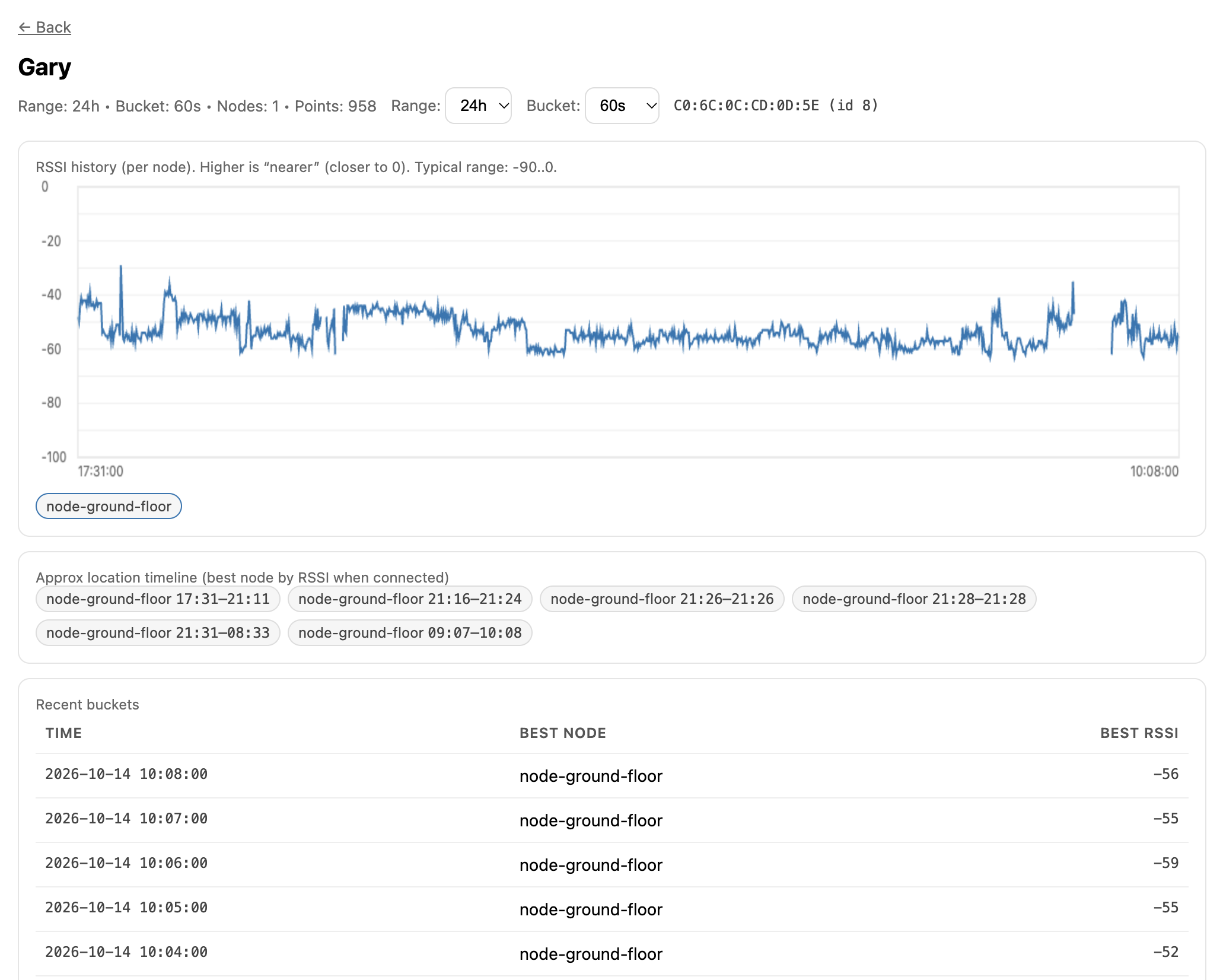
The device view brings signal-strength (RSSI) history, time buckets and an approximate location timeline together, so changes in radio activity can be examined over time. The timeline uses the strongest observing node as an indication of proximity.
Giving the home context
The aim is to use that presence information to drive lighting, heating and other home behaviour. Different parts of the home can respond to the same understanding of who is around, instead of relying only on separate switches, schedules or motion sensors.
A practical use for local signals
I’m interested in how ordinary radio activity can become useful information about a physical environment. Lapis applies that idea to the home: observe the local Bluetooth environment, interpret the patterns, and make the result available for automation.