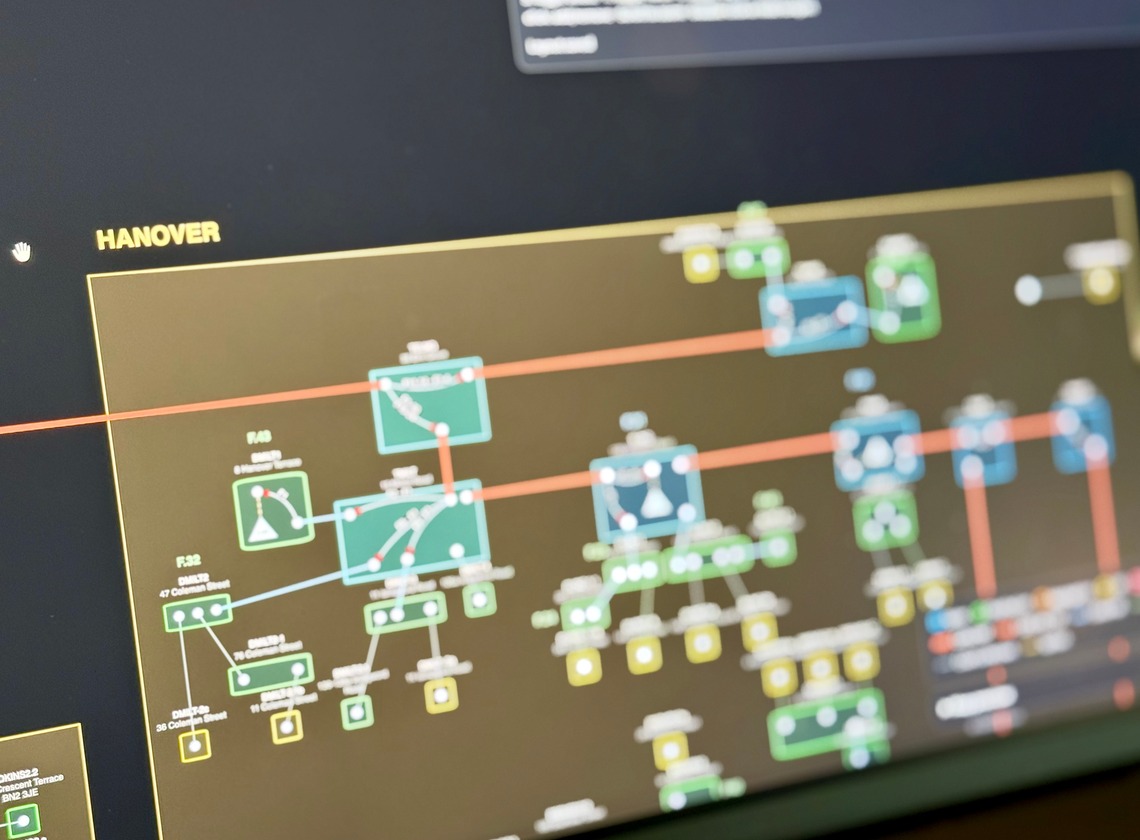
Recording the physical network
Once cable is installed, much of it disappears underground. Plexus records ducts, their bores and available space, cables and joints. Built on open-source software and hardware, it relates that infrastructure to the streets and properties above it, supporting capacity planning as the network grows.
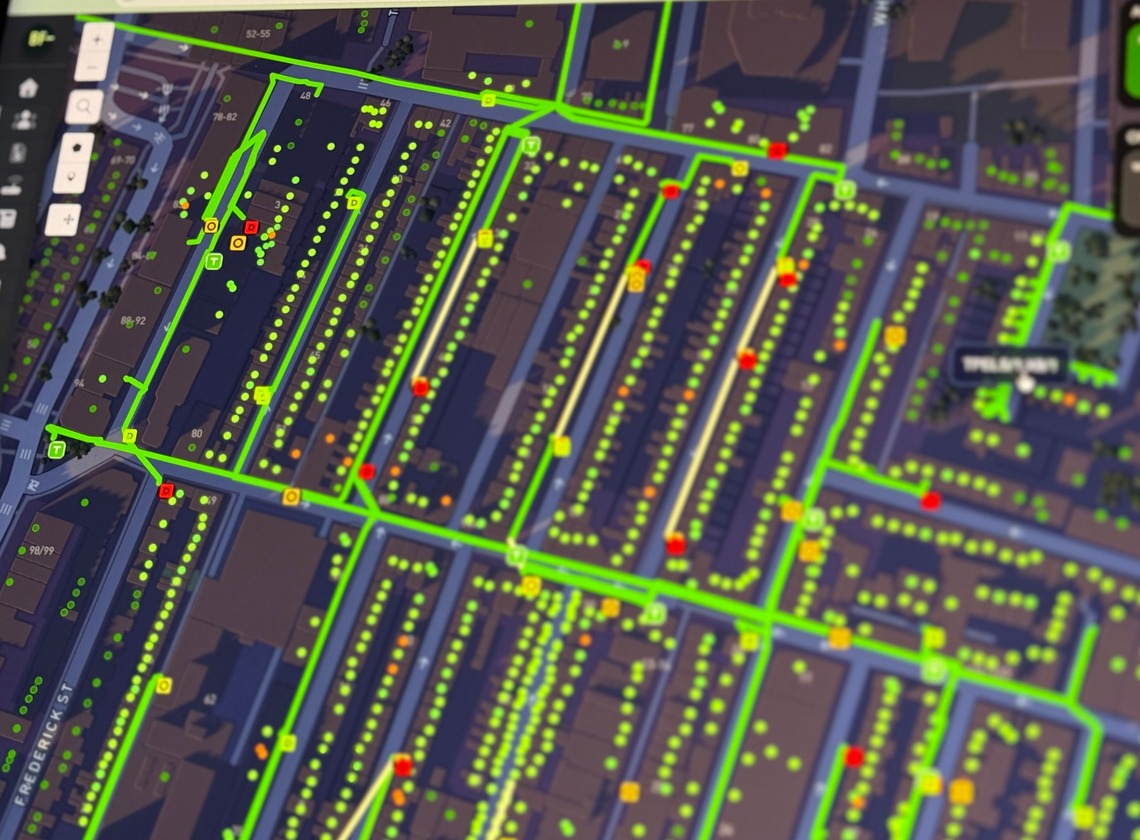
Tracing the optical connections
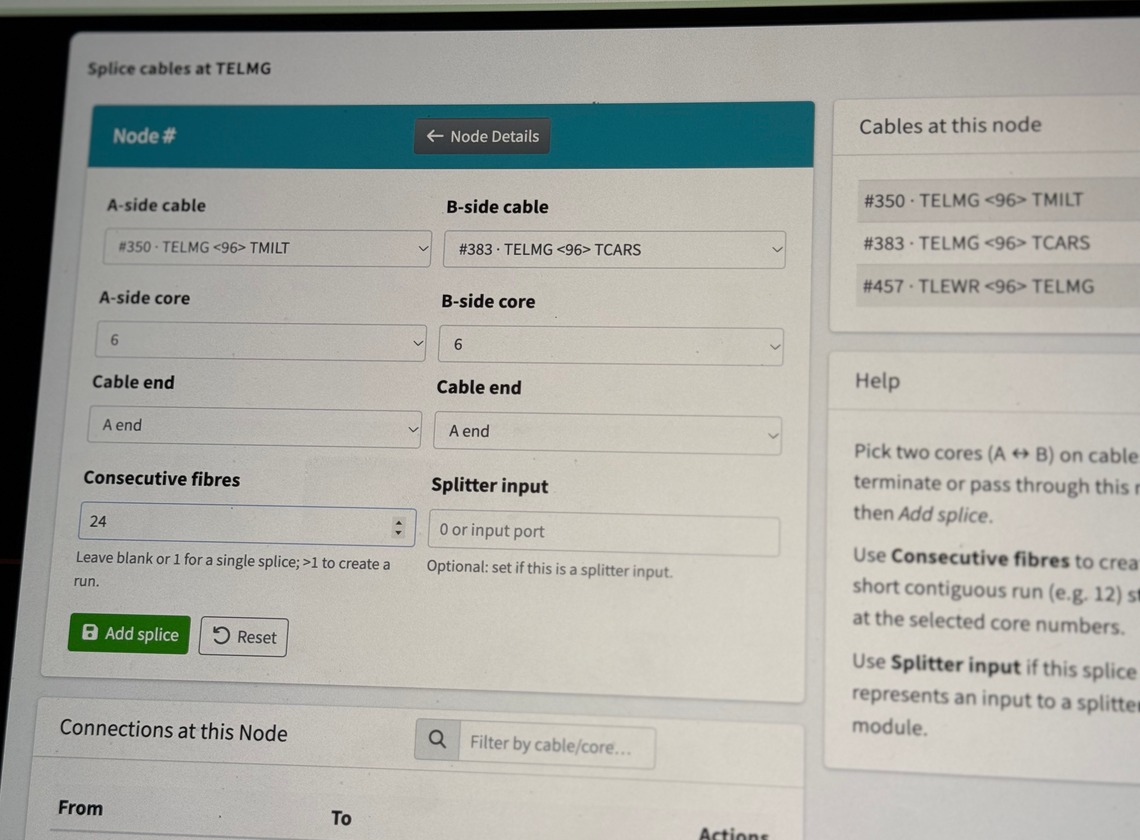
Geography is only part of the record. Plexus follows individual fibres through each splice, connecting the street map to the optical path between an exchange and a customer. Those joins make it possible to trace a connection through multiple cables.
Keeping records close to the work
Engineers can add evidence and reports from the field as they extend the network. The records need to follow the infrastructure as it changes.
Watching optical performance
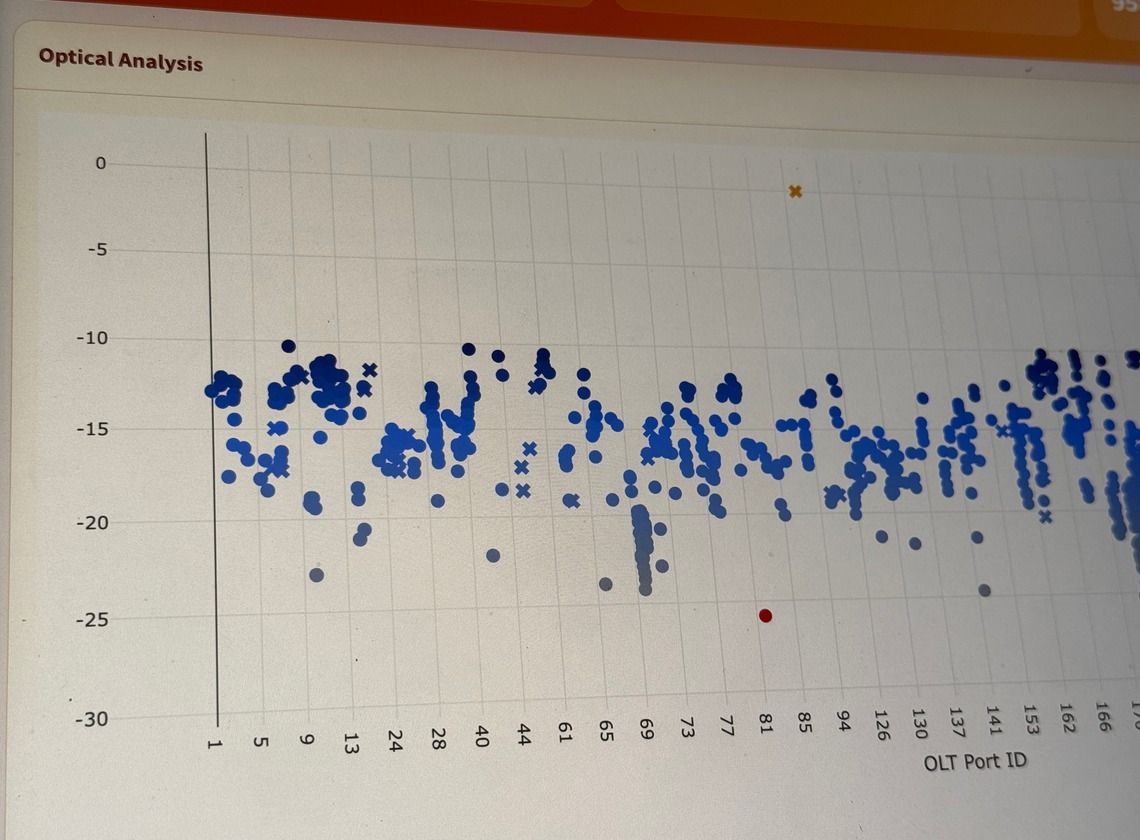
Plexus also tracks customer optical readings. Its OLT loss analyser groups readings by port, helping identify differences worth investigating. Mapping and monitoring sit together: the route, the joins along it and the performance of the connection.
Read the fuller story, Recording the Unseen, on Brighton Fibre.